Update 2018, two years after Trump: Forbes has undone itself. I am abandoning this research
because the desired source, Forbes, has ads that cannot be removed from
the body of the information. Greed, greed, and I am leaving the site
with the work incomplete. Forbes, use some discipline. Get those ads out of thee. Invasive ads drive away readers.
Standard for Fair Taxation: Tax income that exceeds poverty levels. No cap.
 Louis IX at Aigues Mortes, France: Crusades launching port.
Billionaires pay little in proportional taxes. See this categorical romp through the top 50 or so of the billionaires' list.
I. THE LIST
See 2018 billionaires' list at https://www.forbes.com/billionaires/#7270a7c3251c. Compare to five years ago, at http://www.forbes.com/billionaires/list/.
2013 Bankers
Safra Brazil Banker
Fridman Russia Oiler- also Telecommunications- also Banker
2013 Fossileers; Industry
Ambani India Fossils:
Petrochemical, oil, gas
Usmanov Russia Steel/ also Investor
Mittal India Steel
Repeat: Fridman Russia
Oiler- also Telecommer- also Banker
Dangote Nigeria Cement, Flour (who doesn't need that?) Obesitor (sugar)
Akhmetov Ukraine Steel/ Coal (what chance of renewable energy sources there?)
Business
Business
- Susanne Klatten, BMW, 25 billion, inherited
- Forbes states that most self-made women billionaires emerge in US and China (includes those who inherited or married into, but then took substantial steps to grow the wealth)
- Diane Hendricks, Wisconsin, ABC Supply
- Zhou Qunfei, Hong Kong
- Diane Hendricks, ABC Supply
2013 Computing,
Telecommunications, Internet, Feeders Off the Cloud
Gates United States - Computing (Microsoft) now probably
diversified
Helu Mexico Telecommunications
Ellison United States Happy Marriage Hardware-Software
(Oracle)
Thomson Canada Media -- tentacles in all you use to communicate, be communicated to
Repeat: Fridman Russia
Oiler- also Telecommunicator- also Banker. Nice to have your own bank, like the NRA
2013 Fashion, La Beaute
– Trompe l’oeil, j’espere, j’espere. Non? Meh.
Ortega Spain Fast-Fashioniste (Zara)- retail therapy
Arnault France Brander (LVMH – Louis Vuitton Moet Hennessy)
Persson Sweden H & M, Hennes & Mauritz fast-fashionisti -- off the rack but good stuff
Betancourt France Beautification Facquerie (L’Oreal) -- everyone can be a beauty. Believe.
- Francoise Bettancourt Meyers, 42.2 billion. Inherited from her mother, Liliane, who inherited from her father re L'Oreal2018.
2013 Multinational
Conglomerates; “Diversified” Gurus (The Gang of Coy)
Buffett United States Multinational Conglomerateur
(Berkshire Hathaway)
Koch I United States Coy (“diversified”) Also undisclosed
influence-peddler. Left view of right: Pro-corporate agenda of Koch, viewed from Left. Tweedle-dee.
Koch II United States Coy (“diversified”) Also undisclosed influence-peddler. Tweedle-dum.
Koch II United States Coy (“diversified”) Also undisclosed influence-peddler. Tweedle-dum.
Li Ka-Shing Hong Kong Coy (“diversified”) read – ka-ching; various areas, including humanitarian, http://topics.bloomberg.com/li-ka--shing/
Lee Shau Kee Hong Kong Coy (diversifier) http://www.timeout.com.hk/feature-stories/features/48823/the-men-who-rule-hong-kong-lee-shau-kee.html
Blavatnik United States Coy (Diversifier), born in Russia, http://www.moneyedup.com/2010/11/billionaire-profile-len-blavatnik/
Cheng Yu-Tung China also Coy (Diversifier) http://www.therichest.org/nation/richest-persons-in-hong-kong/
.
2013 Hoi Polloi helpers? Targets
(let us help you, little people)?
Walton I United States (Walmart) Welcome to Walmart. Hey, is
that smoke?
Walton II United States again Welcome to Walmart (our wages?
Whatever we want)
Walton III United States who welcomes Walmart any more?
Walton IV United
States Good night, small folks, good night, Waltons. Good night, hopes.
Albrecht Germany Grocer (Aldi: Albrecht Discount) Beats
Walmart.
Albrecht II Germany Grocer
(Aldi, Albrecht Discount) (see Schwarz and Lidl)
Schwarz Germany Retailer (Lidl, competor of Aldi, fight on,
behemoths). More than grocer?
- 2018: 46 billion. Alice Walton, daughter of Sam Walton, Walmart. Richest woman in the world.
.
Information
Bloomberg United States Global business and financial
informationeer; now ads for his (people’s) causes
.
2013 Feeders of Addictions,
Le gambleur, le sweets (some, like dark choc and good beer, good)
Adelson United States casino multiple opportunist, also activity in Singapore, interested in Spain, see http://www.nbcnews.com/travel/casino-tycoon-sheldon-adelson-plans-35-billion-mini-las-vegas-706522.Dislikes investigations
Ferrero Italy Obesitor, but the dark choc is good
Lemann Beer Brazil (urp) (not an addiction but a necessity
when real beer)
Mars I United States Obesitor. Also Uncle Ben, pet stuff. http://biz.yahoo.com/ic/40/40297.html
Mars II United States Obesitrix
Mars III United States Obesitor
.
2013 Online marketing
Bezos United States Online Retail (Amazon)
Page United States Internet search and advertising technologies
(Google)
Brin United States ditto Page (Google)
.
2013 Investors/
Leveraged Buy-outers
Icahn United States Buyout-leveragor (when management itself
buys controlling shares in the company)
Soros United States Hedger – funds with limited partners
using high-risk means
Alwal Bin Talal Alsaud Saudi Arabia investor
.
2013 Real estate
Kwok Hong Kong real estaters
.
2013 Miners – Dreadful sorry,
Clementine
Gonzalez Mexico Miner
Fontbona Chile Miner
Rinehart Australia Miner
Velasco Mexico Miner
.
To be added: A work in progress
Mikhelson
Del Vecchio
Dell
II. Then: What can little folk do to shift money to the common good, when there is so much money made from producing non-essentials, in all the fluff (but fun) that makes money -- fashion, beauty.
II. Then: What can little folk do to shift money to the common good, when there is so much money made from producing non-essentials, in all the fluff (but fun) that makes money -- fashion, beauty.
Homework:
Pick a billionaire. Look for balance. Search online for any humanitarian work it also
touts for itself, and put how much is invested as compared to gross
income from all sources derived.
Then see what issues are important to you for a sustainable life, balanced in interest vs. exploitation. Ethical treatment of people and animals, labor, health:
- How to demote and get out of animal testing, exploited labor, pollution, disease, with so much stacked against success. Common good goals hit profits. Who can see a future for green with all this money in mining, gas, oil, the non-renewable. Look at Fridman here: a banker as well as an oil man and in telecommunications. Try to examine that. NRA and its banking? http://www.dailykos.com/story/2013/03/02/1191132/-Taking-On-The-NRA-The-Koch-Brothers-And-Billionaires-Funded-Groups-Head-On
- Use of telecommunications for the common good: Is there a chance that the telecommunications people would use their resources to disseminate facts, educate, take fact-based stands. Even Louis Vuitton mentions on its site its humanitarian investments. Hype or real?
Next step: A Value-Subtracted-Tax, for each non-sustenance-related
product sold, with proceeds to go for global sustenance, health care, education
for all. Is it time to wake up?


 Saint Peter the Fisherman, Church, Sant Pere Pescador, Figueres, Spain
 Avignon, Bishop's Palace, France.
  Austria, baroque nativity
 Antwerp, Castle Steen, Lanagerwappen
 Bogomil grave, Bosnia
 Nin, Croatia, Bishop Gregory of Nin
 Hradec Kralove, CZ
 Denmark, Sonderborg Castle figure
 Leeds, England. Turtle, ducks back
 Angers Castle, France
 New construction, Berlin, Germany
 Rodel Church, Clan MacLeod, Hebrides, Scotland
 Great Synagogue, Dohany Street, Budapest
 Norman Tower House, Ireland
 Verona, Italy. Juliet and Dan Widing, Italy
 Ostrog Monastery, Montenegro
 Canal, cars, houseboat, Amsterdam, NL
 Roma, scavenging, Romania
 Robert the Bruce, Stirling Castle, Scotland
 Mt. Aetna, lava, smoke, Sicily
 Spis Castle, Slovakia
 Lake Bled, Slovenia
 Old Uppsala, ancient burial mounds, Sweden
 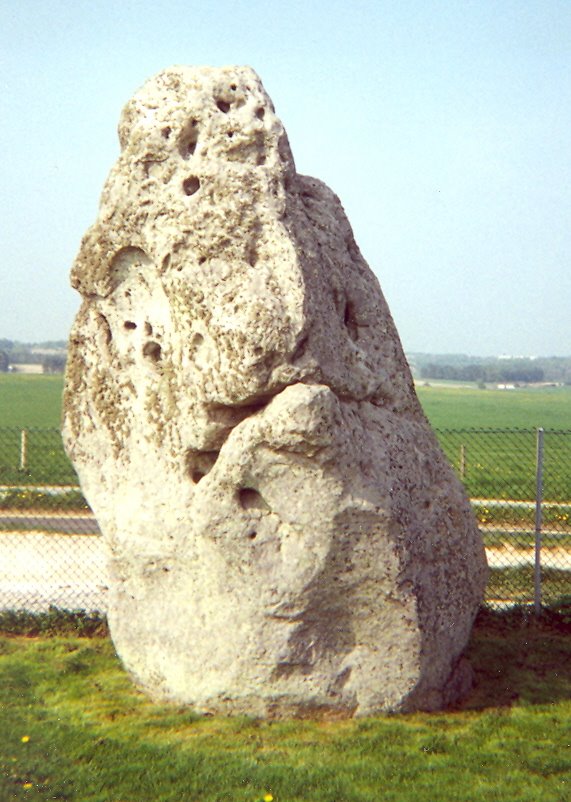 Stonehenge, standing stone, outside the perimeter, Wiltshire, England
 Doner Kebab, St. Petersburg, Russia
 Doner kebab, Roskilde, Denmark
 The Red House, Switzerland
 Woman's armor, Chillon Castle, Switzerland (second from left.
 Woman's armor (left) Thun Castle Museum, Switzerland
 The life after the wedding. She works, he writes. Mariaplain Convent, Salzburg, Austria
 Woman in britches, sass finger signal, Sonderborg Castle furnishing, DK
 Ultimate Off-Road. San Bernardino Pass, Alps, Switzerland side (no injuries).
 Traffic-calming on a budget, Thal, Austria
  Poland. Budget-friendly speed non-trap
 Switzerland. Budget-friendly speed non-trap.
 Men's driving cap, guide at Vlad Dracula's ruined castle, Poinari Citadel, Romania
 Men's driving cap, Aran Island, Ireland (with horse)
 Men's driving cap, a Holder at the Blarney Stone, Blarney Castle, Ireland
 Renaissance wood-burning stove, Gasthof Maria Plain, near Salzburg, Austria
 Renaissance stove I, Salzburg Castle, Festung, Salzburg, Austria
 Renaissance stove II, Salzburg Castle, Festung, Salzburg, Austria
 Renaissance stove I, Kremsmunster Abbey, Kremsmunster, Austria
 Renaissance stove II, Kremsmunster Abbey, Kremsmunster, Austria
 Renaissance stove III, Kremsmunster Abbey, Kremsmunster, Austria
 Renaissance stove, Cheb Castle, Cheb, the Czech Republic
 Renaissance stove, Wittenberg, Germany, in home of Martin Luther